





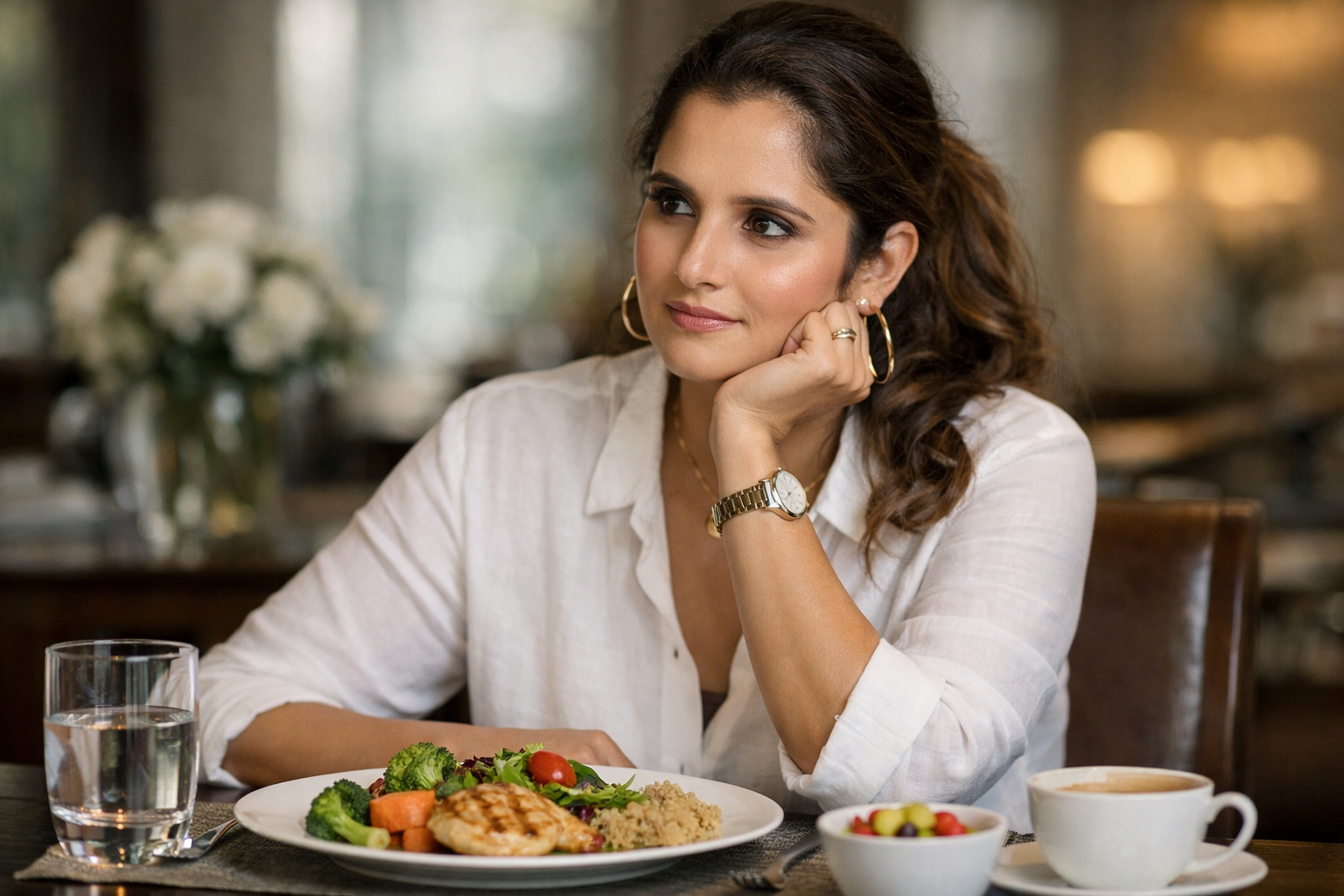
Former tennis star Sania Mirza recently revealed her dietary habits and the importance of maintaining them even after stepping away from professional sports. In a conversation with a news outlet, she stated, “Since I retired from playing, I have begun adhering to a diet, as it’s tempting to relax after a lifetime of discipline.”
Describing her current meals, she noted, “Our typical dinner includes rice, curry—be it chicken or mutton—and a side of vegetables. We always incorporate a variety of salads, as we enjoy them. Our approach is quite straightforward; we prefer to keep our meals simple rather than extravagant.”
Sania’s perspective on nutrition highlights the significance of healthy eating. A well-rounded plate is often the most effective. “Combining rice with a good protein source such as chicken or mutton, alongside cooked vegetables and a fresh salad, can meet most nutritional requirements. This combination provides carbohydrates for energy, protein for muscle repair, fiber for digestive health, and essential micronutrients for overall well-being,” explained Dt Amreen Sheikh, chief dietitian at KIMS Hospitals in Thane.
Many athletes favor uncomplicated meals for their consistency, portion control, and easy digestion. “Eating well doesn’t require elaborate dishes; it’s about choosing the right combinations,” Sheikh pointed out.
What can the average person take away from Sania’s eating habits? Primarily, two vital lessons: the importance of consistency and structure. After exiting a physically demanding lifestyle, it’s common for individuals to gain weight if their eating patterns become overly relaxed. “Sania’s recognition that discipline remains crucial after retirement is a principle we can all adopt. It’s not about strict dieting; it’s about creating a meal plan that accommodates busy schedules, travel, or fatigue. A simple formula of cereal, protein, vegetables, and salad can be quite effective,” Sheikh noted.
Despite common beliefs about rice leading to weight gain, Sheikh clarified that rice itself is not the issue. “The problem lies in overeating. For most healthy adults, one cup of cooked rice per meal is perfectly acceptable. When consumed alongside sufficient protein and fiber, rice is digested well and does not cause sharp increases in blood sugar levels. For those concerned about diabetes or weight management, options like hand-pounded rice or red rice, along with mindful portion control, can be beneficial,” she added.
Key takeaways for healthy eating include:
– Maintain regular mealtimes, as your body thrives on routine.
– Include protein in every meal.
– Eat slowly, aiming to finish meals within 20 to 25 minutes.
– Keep dinner lighter than lunch.
– Stay well-hydrated, especially if reducing physical activity.
– Avoid snacking out of boredom.
A well-balanced plate can significantly contribute to good health when thoughtfully prepared.
Disclaimer: This article is based on publicly available information and expert insights. Always consult with a healthcare professional before starting any new dietary regimen.